
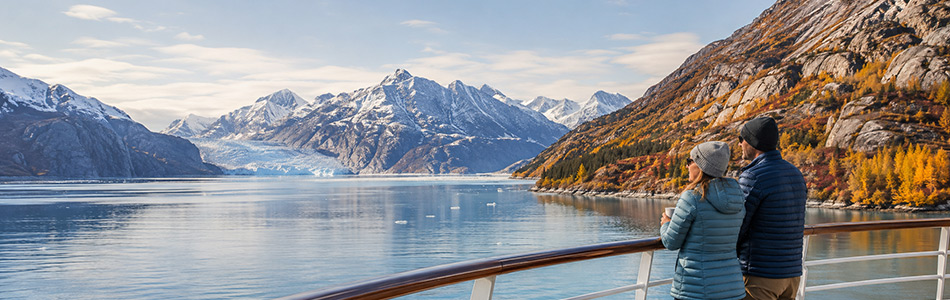
February is still winter in Alaska, with cold temperatures, snow, ice, and limited daylight. It can be a memorable month for land-based northern lights travel, but it is outside the regular Alaska cruise season.
There is no regular Alaska cruise season in February. Most cruise travelers should look to late spring through early fall for Alaska sailings.

Off-season for Alaska cruises

Very cold with snow, ice, and short daylight

Northern lights trips or planning a future cruise

Explore 100+ colorful pages of Alaska photos, cruise tips, and planning inspiration.
There is no regular Alaska cruise season in February. The standard cruise season typically runs from late April or May through September, when conditions are milder, daylight is longer, and ports and tourist facilities are fully operational.
Most major cruise lines avoid winter Alaska sailings because icy waters, harsh weather, and limited port accessibility can make itineraries difficult and less predictable.
February brings true winter conditions across much of Alaska. Temperatures remain very cold, snow and ice are widespread, and daylight is still limited, especially in northern regions.
Travel can be challenging, and many seasonal attractions remain closed. For most visitors, February is best approached as a winter land vacation rather than a cruise month.
Cruises do not operate in February because winter weather creates safety, navigation, and operational challenges. Freezing temperatures can affect onboard logistics, while icy conditions and limited services restrict shore access.
With fewer open port facilities and lower winter cruise demand, regular Alaska cruise operations are concentrated in the warmer months instead.
A land-based winter trip can be a good alternative, especially for travelers interested in northern lights viewing in Alaska?s interior.
Winter activities such as dog sledding, snowmobiling, and snow-covered sightseeing can offer a very different Alaska experience. For cruising, plan for spring or summer departures when the full cruise season resumes.
The best time to cruise Alaska is generally May through September. May and September can be good shoulder-season choices, while June through August offer peak summer conditions, strong wildlife viewing, and the widest range of excursions.
Explore Alaska cruises month by month, including early-season sailings, peak summer travel, shoulder-season options, and off-season alternatives.
AlaskaCruises is located in Scottsdale, Arizona. You may book online or contact us directly. Our business hours and toll-free phone numbers from the following countries are listed below:


Please note that all prices on our website are in US dollars, and travel purchases must be completed with a major credit card.Unless you are considering one of our custom cruise itineraries, certain cruise lines prohibit US-based travel agencies from selling to non-US residents.
All passengers regardless of their home country, citizenship or country of residency are responsible for obtaining the proper documentation for travel. This includes passports and visas for any country they may visit during their trip.