
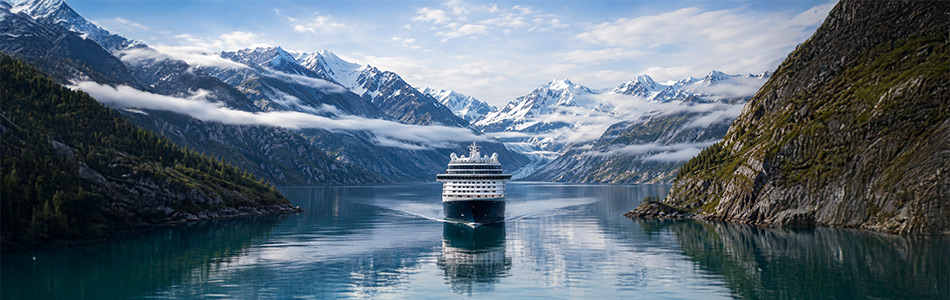
Average temperatures, rainfall, and packing tips for Alaska cruises from May through September.
Alaska is our country's northernmost state, located above Canada and closer to the Arctic than the Lower 48. That latitude brings dramatic scenery - glaciers, fjords, and wildlife - and also creates fast-changing conditions. During the May-September Alaska cruise season, many ports and popular inland stops are often cool-to-mild rather than frigid.
Important: Alaska has major microclimates. Coastal ports (like Juneau and Ketchikan) are usually milder and wetter, while interior locations (like Fairbanks and the Denali area) can be warmer in midsummer but cooler at night.
June and July usually offer the best balance of mild temperatures and manageable rainfall. May can be cooler but less crowded, while September is beautiful but often wetter, especially in Southeast Alaska.

July is typically the warmest month across many Alaska cruise ports and inland stops.

Ketchikan has the highest seasonal rainfall totals among the listed cruise destinations.

Dress in layers and keep a waterproof shell handy for coastal ports and glacier-viewing days.
Below are average daily high temperatures and average monthly precipitation for major Alaska cruise ports and common land-tour cities during May-September.
Average high temperatures for popular Alaska cruise ports and land-tour destinations.
| Destination | May | June | July | August | September |
|---|---|---|---|---|---|
| Anchorage | 58o | 66o | 68o Warmest | 66o | 57o |
| Fairbanks | 62o | 72o | 73o Warmest | 66o | 55o |
| Denali National Park | 55o | 65o | 66o Warmest | 61o | 51o |
| Juneau | 58o | 62o | 64o Warmest | 63o | 56o |
| Ketchikan | 57o | 61o | 65o Warmest | 65o Warmest | 59o |
| Skagway | 58o | 63o | 65oWarmest | 63o | 57o |
| Vancouver | 62o | 67o | 72o Warmest | 72o Warmest | 66o |
Average monthly precipitation totals. Coastal ports generally trend wetter than inland Alaska.
| Destination | May | June | July | August | September |
|---|---|---|---|---|---|
| Anchorage | 0.62 in | 0.99 in | 1.70 in | 2.48 in | 3.02 in Wettest |
| Fairbanks | 0.54 in | 1.48 in | 2.26 in Wettest | 2.10 in | 1.35 in |
| Denali Park | 0.84 in | 2.42 in | 3.12 in Wettest | 3.01 in | 1.74 in |
| Juneau | 3.51 in | 3.82 in | 5.14 in | 6.41 in | 9.15 in Wettest |
| Ketchikan | 8.68 in | 7.02 in | 7.33 in | 11.30 in | 14.30 in Wettest |
| Skagway | 1.07 in | 1.16 in | 1.38 in | 2.35 in | 3.89 in Wettest |
| Vancouver | 2.8 in | 2.1 in | 2.0 in | 2.9 in | 5.8 in Wettest |
Average daylight hours per day. Northern destinations like Fairbanks experience the longest summer days.
| Destination | May | June | July | August | September |
|---|---|---|---|---|---|
| Anchorage | 17 hrs | 19 hrs Peak | 18.5 hrs | 16.5 hrs | 13.5 hrs |
| Fairbanks | 18.5 hrs | 21.5 hrs Peak | 20 hrs | 17 hrs | 13 hrs |
| Denali Park | 17 hrs | 19.5 hrs Peak | 18 hrs | 16 hrs | 12.5 hrs |
| Juneau | 16.5 hrs | 18.5 hrs Peak | 18 hrs | 15.5 hrs | 12.5 hrs |
| Ketchikan | 16 hrs | 17.5 hrs Peak | 17 hrs | 15 hrs | 12.5 hrs |
| Skagway | 17 hrs | 19 hrs Peak | 18.5 hrs | 16 hrs | 12.5 hrs |
| Vancouver | 15.5 hrs | 16.3 hrs Peak | 15.5 hrs | 14.3 hrs | 12.5 hrs |
Juneau, Ketchikan, and Skagway are often milder, wetter, and more affected by marine air. A waterproof shell is one of the most useful items to pack.
Fairbanks, Denali Park, and Anchorage can feel warmer in midsummer but may cool down quickly, especially early or late in the season.
Alaska's weather changes dramatically throughout the cruise season, and understanding what to expect month-by-month is key to planning the right itinerary. From long sunny days in June and July to cooler, quieter shoulder-season sailings in May and September, each month offers a different blend of temperatures, daylight, and wildlife activity. Coastal regions like Juneau, Ketchikan, and Skagway experience milder summers with frequent rain, while inland areas warm up more quickly. Whether you're focused on glacier viewing, whale watching, or simply choosing the most comfortable time to cruise, Alaska's seasonal weather patterns play a major role in shaping your experience.
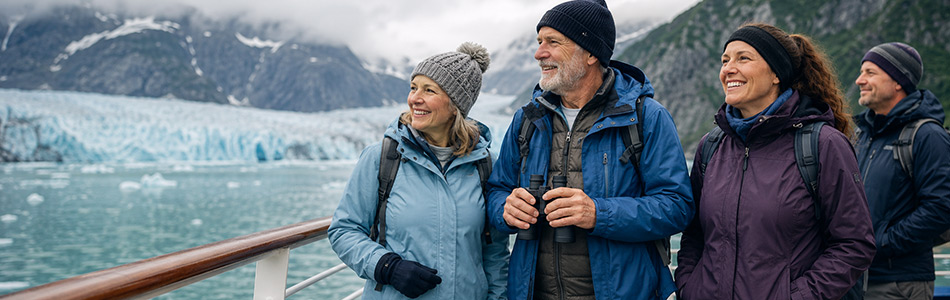
Most cruise-season days are comfortable, but Alaska weather can change quickly, especially on the water and near glaciers. Plan to dress in layers so you can adapt throughout the day.
Layering is key as Alaska weather changes quickly.
Not usually, but it can be cooler and wetter, especially in Southeast Alaska. Pack layers and rain gear so you stay comfortable.
July is typically the warmest month across many Alaska ports and inland stops, with June and August close behind.
Southeastern ports, especially Juneau and Ketchikan, tend to be much wetter than Anchorage or Fairbanks. A waterproof shell makes a big difference.
Snow is uncommon at sea-level ports during the main cruise season, but higher elevations and glacier areas can be colder year-round. Weather varies by location and elevation.
AlaskaCruises is located in Scottsdale, Arizona. You may book online or contact us directly. Our business hours and toll-free phone numbers from the following countries are listed below:


Please note that all prices on our website are in US dollars, and travel purchases must be completed with a major credit card.Unless you are considering one of our custom cruise itineraries, certain cruise lines prohibit US-based travel agencies from selling to non-US residents.
All passengers regardless of their home country, citizenship or country of residency are responsible for obtaining the proper documentation for travel. This includes passports and visas for any country they may visit during their trip.